Whole-Home Water Filtration Systems
Many homeowners install point-of-use filters in their kitchens to purify water for cooking and drinking. A whole-home water filter is a more comprehensive solution that filters all the water entering your house.
An important consideration with whole-house water filtration systems in Sarasota is flow rate. The flow rate of the system must meet or exceed your household’s peak demand. If it doesn’t, you’ll experience periods of low water pressure. It will also put an undue strain on your equipment and lead to higher maintenance costs and a shorter lifespan. We’ll perform accurate calculations to ensure that you have ample clean water to meet your family’s needs.
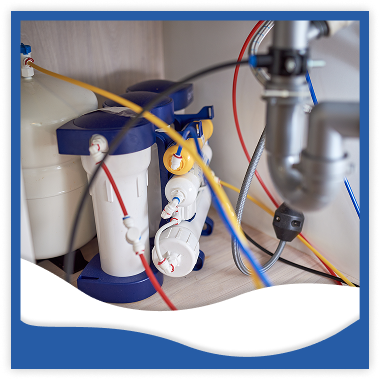
The typical whole-home water purifier functions by forcing your water through a series of stages. There’s usually a prefilter to trap the largest particles, preserving the more expensive sediment filter. The sediment filter provides the primary mechanical filtration, trapping dirt, silt, heavy metals, and more. The industry gauges sediment filters using absolute pore size. The smaller the size, the more comprehensive the filtration the equipment can deliver.
Many water purification systems use one or more activated carbon filtration stages. Activated carbon is made from materials such as coconut shells or coal that are treated to create millions of tiny pores. These pores greatly increase the surface area of the carbon, allowing it to trap contaminants as water flows through the filter. This helps reduce chlorine, chemical tastes and odors, and organic compounds that can affect water quality.
Water purifiers can also have an ultraviolet (UV) light stage. Sediment filters can remove some pathogens depending on their quality. That said, a UV light can neutralize over 99% of pathogens, including bacteria, viruses, and parasites. Water purifiers can also include conditioning post-filters, such as those that slightly adjust pH levels. The primary purpose of these polishing filters is to improve taste.